
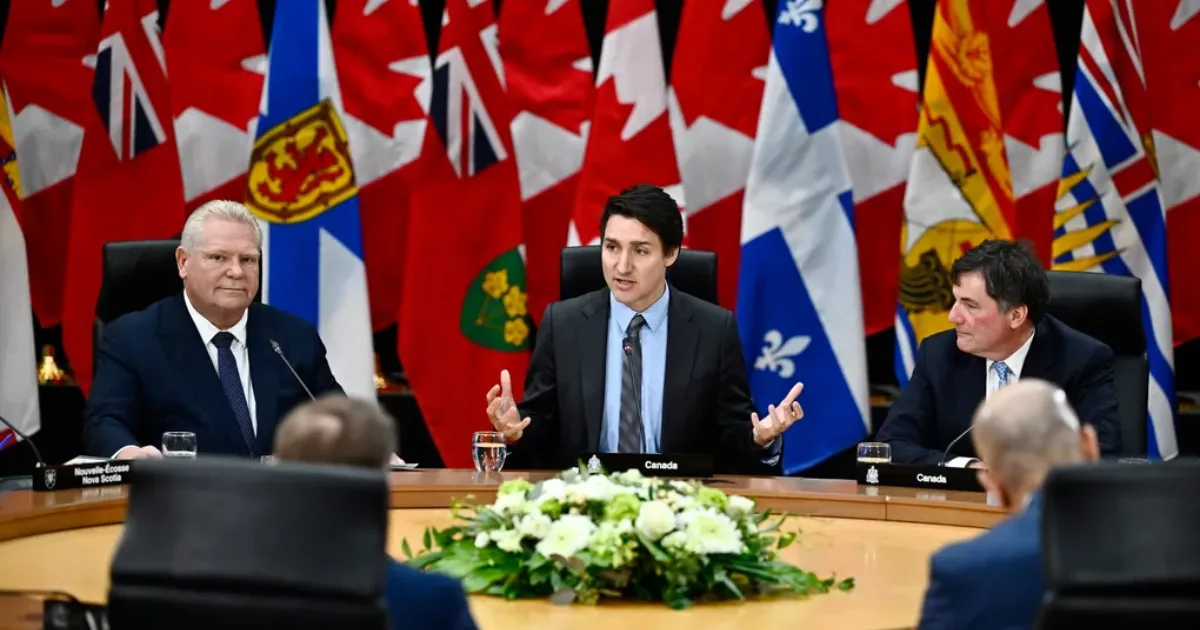

Hey there, folks. Imagine this: You’re sitting down with a cup of coffee, flipping through the news, and suddenly headlines about tariffs and trade wars pop up. Sounds complicated, right? But don’t worry—I’m here to break it down in plain English, like we’re chatting over that coffee. Today, we’re talking about a big statement from the Canadian government: “Any response to US tariffs won’t single out Alberta.” This isn’t just politician-speak; it’s a promise of fairness in a tense North American trade standoff.
If you’re wondering what this means for everyday Canadians—whether you’re in bustling Toronto, sunny Vancouver, or the wide-open prairies of Alberta—this article is for you. We’ll explore the backstory, the key players, and why this matters to your wallet, your job, and even your morning drive (hello, gas prices!). By the end, you’ll feel like an expert on Canada-US tariffs, Alberta’s role, and how the government plans to keep things balanced. Let’s dive in.
The Spark: Why Is This Tariff Talk Happening Now?
Picture two old neighbors who’ve shared a fence for decades—swapping tools, hosting barbecues, and relying on each other for everything from groceries to jobs. That’s Canada and the US in a nutshell. Our economies are super intertwined; every day, about $3.6 billion CAD in goods and services cross the border. That’s more than enough to buy every Canadian a fancy latte twice.
But lately, things have gotten a bit prickly. Enter US President Donald Trump, who’s back in the spotlight and threatening to slap 25% tariffs on all Canadian exports starting as early as late January 2025. Tariffs are basically taxes on imports, and Trump’s idea? It’s aimed at pressuring Canada on issues like border security and trade imbalances. He even joked about making Canada the 51st state—yikes!
Canada’s not sitting idle. Officials like Finance Minister Chrystia Freeland have vowed a “robust” response, including counter-tariffs on US goods worth up to $105 billion CAD. Think orange juice, steel products, even toilets—stuff Americans sell us that we could swap for homegrown alternatives. The goal? Hit back where it hurts the US economy without shooting ourselves in the foot.
Enter Alberta, Canada’s oil powerhouse. About 80% of our crude oil heads south to US refineries. Any whiff of export restrictions or energy tariffs from Ottawa could tank Alberta’s economy overnight. That’s why Premier Danielle Smith has been vocal: “We won’t support cutting off energy exports or slapping tariffs on our oil.” She’s right—oil and gas are provincially owned, and messing with them could spark a full-blown family feud within Canada.
The Big Statement: No Singling Out Alberta
On January 29, 2025, Energy and Natural Resources Minister Jonathan Wilkinson stepped up in Calgary (Alberta’s heartland) and said it loud and clear: “Any Canadian response to US tariffs will be regionally fair and equitable and not single out Alberta.” It’s like the government saying, “Hey, we’re in this together—no province left behind.”
Wilkinson didn’t mince words. “If there is pain, Quebec will feel it, Ontario will feel it, the west will feel it, Atlantic Canada will feel it.” The plan? Focus on retaliatory tariffs against US products that Canadians can easily replace—like buying maple syrup instead of Florida oranges. This way, the “pain” is shared, but minimized for us.
Why does this matter? Alberta’s economy is a beast: It pumps out 4.4 million barrels of oil a day, employs hundreds of thousands, and sends billions south. Singling it out could mean job losses, lower royalties, and higher gas prices nationwide (since Alberta oil keeps costs down). Wilkinson’s reassurance eases those fears, showing Ottawa gets the big picture.
To make it crystal clear, here’s a quick table breaking down the key differences between a “fair” response and a “singled-out” one:
| Aspect | Fair Response (No Singling Out) | Singled-Out Response (Bad Idea for Alberta) |
|---|---|---|
| Target Sectors | US consumer goods (e.g., orange juice, steel) | Canadian energy exports (e.g., oil to US refineries) |
| Impact on Provinces | Shared across all (Quebec, Ontario, West, Atlantic) | Hits Alberta hardest (80% oil exports affected) |
| Economic Goal | Hurt US more than Canada; easy swaps for consumers | Self-harm: Higher energy costs, job losses in oilpatch |
| Government Stance | “Equitable and robust” – Wilkinson | Opposed by Premier Smith: “Won’t stand for it” |
| Daily Life Effect | Slight price hikes on imports; support local buys | Gas prices spike; ripples to all provinces |
This table shows why fairness isn’t just nice—it’s smart economics.
Alberta’s Voice: Premier Smith’s Fight for Fair Play
Let’s zoom in on Danielle Smith, Alberta’s premier and a no-nonsense leader who’s not afraid to call out Ottawa. Back in January, after meeting Trump at his Mar-a-Lago resort (invited by Shark Tank’s Kevin O’Leary), Smith made headlines: “Oil and gas are owned by the provinces, principally Alberta, and we won’t stand for that.” She’s been lobbying hard, even crediting her team’s advocacy for a later US tweak—dropping the oil tariff threat to 10% instead of 25%.
Smith’s strategy? A four-pronged Alberta response announced in March 2025: Prioritize “Buy Canadian” for government procurement, halt new US alcohol purchases, push for “Made in Canada” labels, and chase internal free trade deals with other provinces. It’s scrappy, local-first thinking that protects jobs without escalating the war.
But it’s not all smooth sailing. Opposition voices, like Alberta NDP Leader Naheed Nenshi, argue Smith is “taking one of Canada’s best weapons off the table” by ruling out energy levers. Fair point—energy is our ace. Yet Smith’s stance builds trust: “We’re a good partner… maintain this tariff-free relationship.” In a world of bluster, reliability wins friends (and markets).
Broader Impacts: How Tariffs Touch Every Canadian
Okay, enough shop talk—how does this hit you? Tariffs aren’t abstract; they’re the extra buck on your grocery bill or the delay in that new car part.
First, consumers: US goods could cost 25% more if counters kick in. But Wilkinson’s plan smartly targets swappables—think ketchup (Heinz is Canadian now!) or lumber alternatives. Pro tip: Stock up on local. It saves money and boosts our economy.
For businesses, it’s a mixed bag. Alberta’s oilpatch sighs relief—no export bans mean steady flow to US buyers, keeping refineries humming and prices stable. But auto makers in Ontario? They might feel the steel pinch. Overall, experts like those at the Business Council of Alberta see this as dodging a “worst-case scenario.”
Jobs are the real worry. Tariffs could risk thousands—US plants rely on Canadian parts, and vice versa. But shared pain means shared solutions: Retraining programs, diversifying markets (hello, Asia for oil?), and diplomacy.
Environmentally? A silver lining. Less reliance on US ties pushes Canada toward green energy, aligning with global climate goals. Alberta’s already innovating in carbon capture—tariffs could accelerate that.
And nationally? Unity’s key. Provinces like Quebec (hydro power) and BC (lumber) are in the boat too. PM Justin Trudeau’s calls with premiers show teamwork: “Team Canada” against external threats.
Historical Echoes: Lessons from the Last Trade Spat
This isn’t our first rodeo. Remember 2018? Trump hit Canadian steel and aluminum with tariffs, citing “national security” (eye roll). Canada fired back with $16.6 billion in counters on US whiskey, yogurt, and playing cards. It stung—US sales dropped 10%—but it worked. Tariffs lifted after USMCA talks.
Alberta felt it then too: Pipeline delays amid the chaos. But we adapted, exporting more to Europe. Today’s vow of no singling out? It’s wiser, learning from that pain to spread the load.
Looking Ahead: Hope, Hurdles, and What to Watch
As of October 2025, the tariff truce holds—US paused escalations in April, and Alberta even hit “pause” on some retaliatory buys. Relief, yes—but uncertainty lingers. Trump 2.0 could restart anytime.
Optimism? Plenty. Surge Energy’s Paul Colborne calls it “saddening” but fixable with diplomacy. Long-term, experts push diversification: More pipelines east, LNG exports, and tech ties.
For you? Stay informed—follow updates from Global Affairs Canada. Support local: That “Made in Canada” label isn’t just patriotic; it’s practical.
Wrapping It Up: Fairness in the Face of Fireworks
So, there you have it: Canada Says Any Tariffs Response to the US Will Not Single Out Alberta—it’s a blueprint for unity and smarts. In a neighborhood spat, fairness keeps the fence strong. Whether you’re an Albertan rancher, an Ontarian factory worker, or a Maritimer fisher, this shared approach protects us all.